
CRPS (Complex Regional Pain Syndrome): our framework
CRPS (Complex Regional Pain Syndrome): Our Framework
Complex regional pain syndrome (CRPS), also called reflex sympathetic dystrophy (RSD), is a nervous system whose alarm stays on after the injury healed. Restoring sleep is key. We treat it early, calm the nerves that feed it, turn down the nervous system’s volume with ketamine, and rebuild movement and metabolic health underneath it.
Sleep restoration is key
A limb that burns at rest wrecks sleep, and poor sleep turns up the nervous system’s volume, which is exactly what CRPS feeds on. So restoring sleep comes first, with our Sleep Hygiene protocol, alongside every other treatment on this page.
Early treatment matters most
CRPS responds best when treated early: in the first six months, and no later than two years. Pain far out of proportion to the injury, a change in color or temperature, swelling, a difference in sweating, or stiffness in one limb after a fracture, sprain or surgery are the signals not to wait.
How it is diagnosed
There is no scan or blood test for CRPS. The diagnosis is made at the bedside with the Budapest criteria: pain out of proportion to the injury, plus changes in temperature or color, swelling or sweating, hair, nail or skin, and movement or strength, compared with the other side.
What we use
- Sympathetic nerve blocks (stellate ganglion for the arm, lumbar sympathetic for the leg). Each block is a test and a treatment: if numbing the sympathetic nerves eases the burning, those nerves are feeding the pain. When the relief wears off too soon, radiofrequency treatment of the same nerves can make it last longer.
- Ketamine, which blocks the NMDA receptor that keeps the spinal cord wound up. Nearly all patients use it under the tongue or as a nasal spray. A compounded cream of ketamine, lidocaine and diclofenac goes on the skin for pain from light touch. IV infusion is available and rarely chosen.
- TENS and EMS, electrical stimulation of the nerves and muscles.
- The vibration plate, to wake up the small muscles that keep joints steady and retrain balance.
- Red light therapy.
- Spinal cord or peripheral nerve stimulation when CRPS has moved past the window where blocks alone hold, once a trial shows it works for you.
- Physical and occupational therapy, in the right order: after the pain is controlled enough for movement to be bearable, with graded motor imagery and desensitization.
Supplements we use
Castor oil with a few drops of copaiba oil, and arginine with citrulline.
The terrain underneath it
A nervous system running on poor sleep, stress hormones and metabolic inflammation is easier to sensitize, and CRPS depends on that sensitization. We are aggressive on 🧬 metainflammation. Sleep, graded movement and Acceptance and Commitment Therapy are at least 50 percent of a CRPS plan, alongside the procedures. The protocols that support it:
- 🛏️ Sleep Hygiene, to restore sleep.
- 🍽️ Eat, Don’t Eat, our metainflammation diet.
- 🏃 Activity: graded movement, built up as the pain allows.
- Tobacco cessation: we help you stop.
What to avoid
- Ice and hot-and-cold contrast therapy, which are generally not advised in CRPS.
- Elective surgery on a flaring limb, which can set off a new flare at the surgical site.
Prevention
High-dose vitamin C after a wrist fracture lowers the chance of developing CRPS, and moving early after a stroke rather than staying in bed lowers the risk too.
Where the care happens
The diagnosis and treatment on this page happen at the Padda Institute.
Get seen the same day for a hot, swollen limb with fever; sudden calf swelling and pain, especially after a cast or a long period of not moving; rapidly worsening pain in a recently casted or wrapped limb; or new weakness or numbness spreading beyond the injury. These are not CRPS until other causes are ruled out.
Order the whole protocol
The supplements for this protocol that our store carries, with our dosing, on one order page.
Watch
 Complex Regional Pain Syndrome (CRPS): Burning, Swelling, Color ChangePadda Institute on YouTube
 Ketamine for RSD/CRPS: Sublingual, Topical and IV RoutesPadda Institute on YouTube
 CRPS and the Cost of Doing Nothing: Joseph’s StoryPadda Institute on YouTube
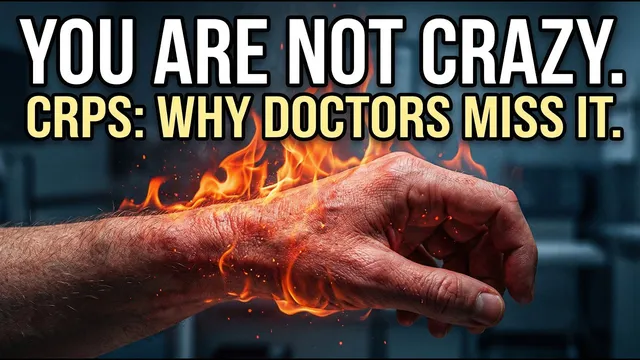 The Truth About CRPS MisdiagnosisPadda Institute on YouTube
 Stellate Ganglion Block: How the Procedure WorksPadda Institute on YouTube
 Lumbar Sympathetic Nerve Block: How It Works and What It Can DiagnosePadda Institute on YouTube
 Photobiomodulation (Red Light): Metabolic Inflammation and MelatoninPadda Institute on YouTube